Most owners ask me the wrong question first. They ask what a website costs. The better question, the one that actually protects your money, is what makes a website worth paying for in the first place. Because you can spend five hundred dollars and get nothing that brings in a single call, or spend a fair amount and get something that pays for itself in a month. The price tag is not the thing that decides which one you end up with.
I have been building sites for service businesses across the DFW metroplex since 2015, and I have rebuilt a lot of websites that owners already paid for once. So let me walk you through what actually separates a site that just exists from one that books jobs. Think of this as the checklist to run before you hand anyone your money, whether that is me, another freelancer, an agency, or a DIY builder. If you want the numbers side of this, I cover that separately in my honest pricing guide for DFW websites. This post is about what you should be getting for it.
A foundation that actually works, not just looks finished
A site can look done and still be broken underneath. The foundation is the part you do not see in a screenshot, and it is the part that decides whether the site lasts and whether Google trusts it.
At minimum, a service business website needs to be built on a platform you actually own and can move, not rented space you can be locked out of. It needs an SSL certificate so browsers do not warn people away. It needs to load fast, because most of your visitors are on a phone and they leave if it stalls. And it needs to be genuinely mobile-friendly, not just shrunk down. These are not upgrades. They are the floor. If someone is quoting you a website that does not include all of these, you are not getting a deal, you are getting a liability.
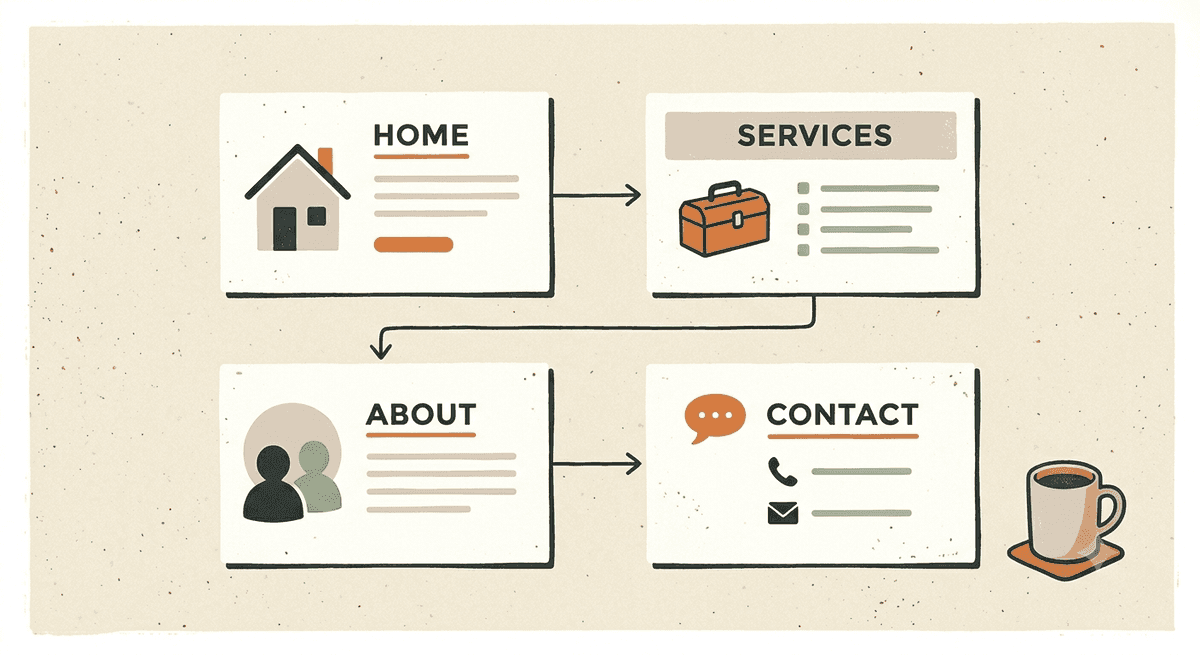
You also want the right pages, built with intent. I broke down exactly which ones in my guide to the essential pages every service business needs, so I will not repeat the whole list here. The short version: a clear home, a real services breakdown, an about page that builds trust, and a contact page that makes reaching you effortless.
It is built to capture leads, not just display information
This is the single biggest difference between a website that earns its cost and one that just sits there. A brochure tells people about you. A lead-capture site turns a curious visitor into a phone call or a form submission. Most of the sites I rebuild were brochures. The owner paid for information when they needed a salesperson.
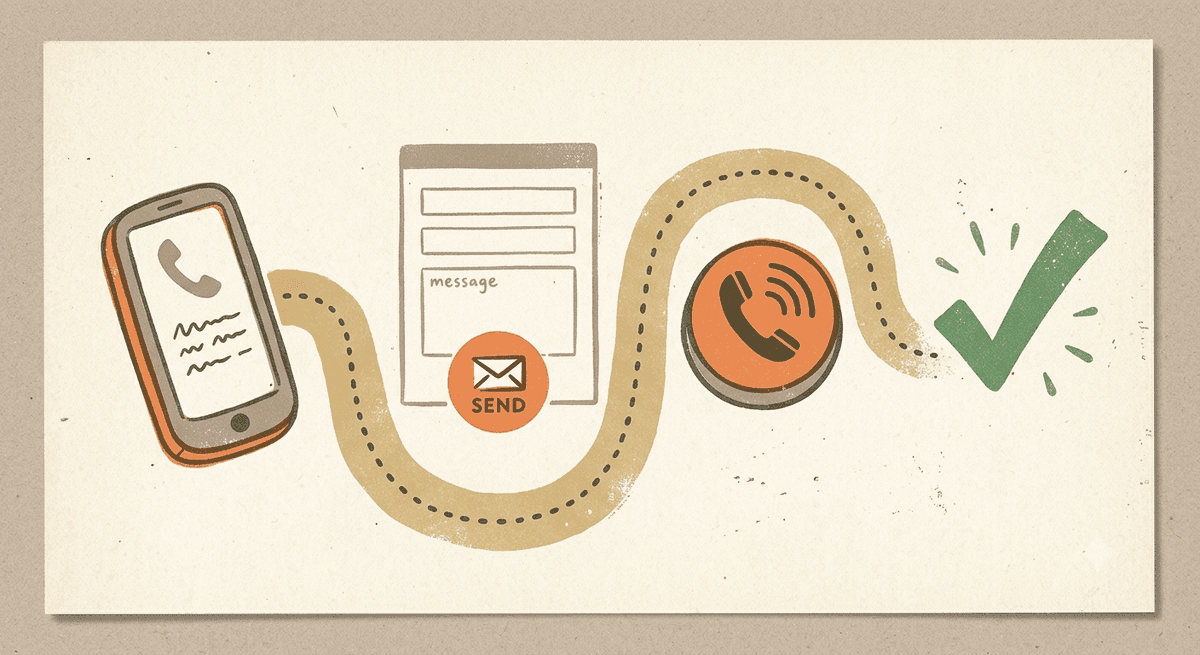
What that looks like in practice is simple but it has to be there. Your phone number should be visible and tap-to-call on mobile, on every page, not buried on a contact tab. There should be a clear call to action on every page telling people the next step, whether that is “Get a free quote” or “Call us today.” Your contact form should be short and obvious, because every extra field you add is another reason for someone to give up. And ideally those form submissions should flow somewhere you will actually see and follow up on quickly, since a lead you answer in five minutes is worth far more than one you find in your inbox three days later.
If a site looks beautiful but does not do these things, it will quietly cost you customers without you ever knowing. I went deeper on this failure mode in why your website isn’t converting, because it is the most common and most expensive mistake I see.
It earns trust before you ever pick up the phone
People do not call a business they are not sure about. A website worth paying for does the work of building trust while you sleep, so the people who do call are already half sold.
Real reviews and testimonials from actual local customers do more than any clever copy, because a homeowner in your area trusts another homeowner more than they trust your marketing. Real photography matters here too. Your trucks, your team, your finished jobs. A generic stock photo of a model in a hard hat who has clearly never held a wrench does the opposite of building trust, because people can tell. And basic credibility markers, your service area, how long you have been in business, any licenses or certifications, quietly answer the questions running through a stranger’s head before they commit.
It can actually be found
A website nobody finds is an expensive business card. Being findable is part of what makes a site worth the investment, and it is the part most cheap builds skip entirely.
At a minimum your site should be structured so search engines understand what you do and where you do it. That means proper page titles, clean structure, fast load times, and content written around what your customers actually search for. In 2026 there is a newer layer to this as well, since more people now ask ChatGPT or read Google’s AI answer instead of scrolling links. The good news is that the same clean, well-structured site that ranks on Google is what those AI tools pull from, which I explain in detail in my piece on how DFW service businesses get found in AI search. You do not need to chase every trend. You need a site built on a solid, findable foundation.
It comes with a plan for after launch
A website is not a one-time purchase like a sign for your building. It is more like a vehicle. It needs upkeep, or it breaks down at the worst possible time. A site worth paying for comes with a clear answer to what happens after launch: who keeps it updated, who fixes it if it goes down, who handles security.
This is where a lot of cheap builds fall apart. Someone hands you a finished site, disappears, and a year later it is running outdated software, throwing errors, and you cannot reach anyone. Then you are paying again to rebuild what you already bought. Whether you handle maintenance yourself or pay someone, the point is that a real website includes a real plan for keeping it alive. I broke down what that actually costs in my guide to what you should pay for WordPress maintenance.
So what is it actually worth?
Here is the honest way to think about it. A website is worth paying for when it does a job: it brings in leads, it builds trust, it can be found, and it keeps working. The dollar figure matters far less than whether you are getting those things. A cheap site that skips the foundation, ignores lead capture, and disappears after launch is not cheap, it is just a slower way to waste money. A fairly priced site that nails the fundamentals pays for itself, often quickly.
If you are weighing who should build it, that is its own decision, and I laid out the real tradeoffs in freelancer vs agency vs Wix for a DFW service business. But whoever you choose, run them against this checklist first. The foundation, the lead capture, the trust, the findability, and the plan for after launch. Get those and you have a website worth every dollar. Miss them and the price was never the problem.
Frequently asked questions
What should a service business website include at a minimum?
At a minimum it needs a fast, mobile-friendly, secure foundation on a platform you own, the core pages (home, services, about, contact), visible tap-to-call and a clear call to action on every page, a simple contact form, real reviews and photography for trust, basic search optimization so it can be found, and a plan for maintenance after launch. Anything missing from that list is a gap that will cost you customers.
Why do some cheap websites end up costing more?
Cheap builds often skip the foundation, lead capture, and post-launch support to hit a low price. The result is a site that looks finished but does not bring in leads, breaks down over time, and eventually needs to be rebuilt. Paying twice, once for the cheap version and again for the real one, costs far more than getting it right the first time.
How do I know if my current website is worth keeping?
Run it against the essentials: is it fast and mobile-friendly, does it capture leads with clear calls to action and easy contact, does it build trust with real reviews and photos, can it be found in search, and is it being maintained? If it falls short on lead capture or the technical foundation, it is usually worth fixing or rebuilding, because those gaps directly cost you customers every month.
Does a more expensive website mean more customers?
Not by itself. Price does not create results, the right components do. A fairly priced site that nails lead capture, trust, and findability will outperform an expensive one that ignores them. Focus on what the site actually does for your business rather than the size of the invoice.
Not sure your site measures up?
If you run a service business in the DFW area and you are not sure whether your website is doing its job, that is exactly what I help with at PC Designs. I will give you a straight answer on what is working, what is missing, and whether it is worth fixing or rebuilding. Reach out and let’s talk.