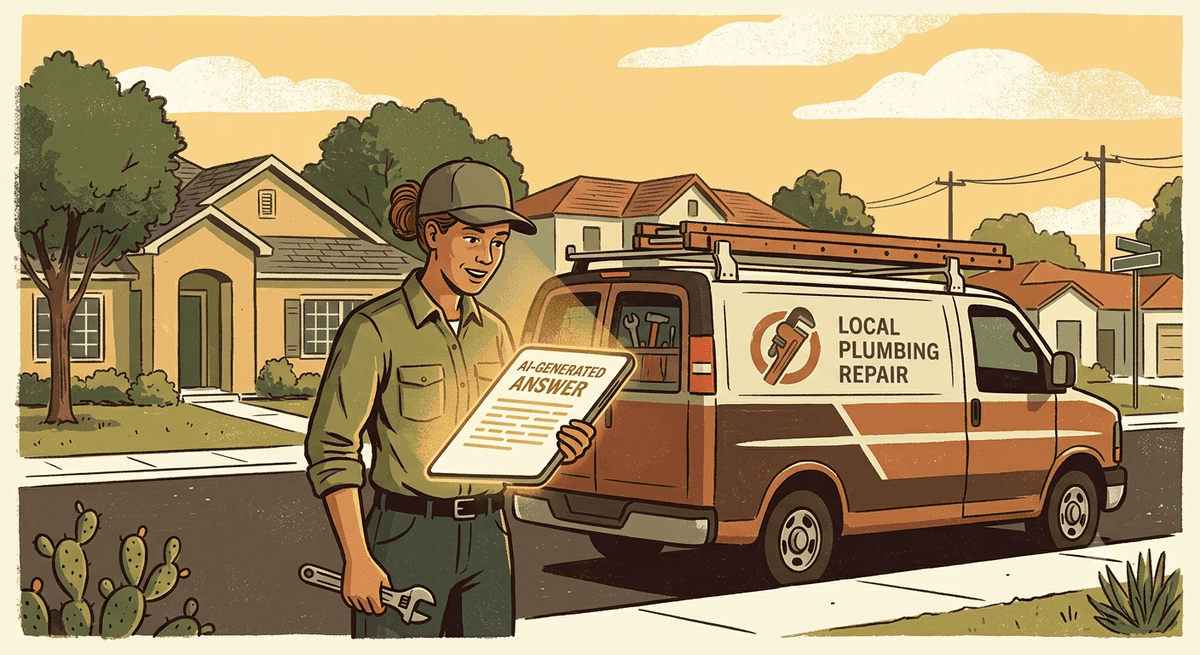
A customer in Arlington needs a plumber. In 2026, a growing share of them do not open Google and scroll past the ads anymore. They open ChatGPT, or they type the question into Google and read the AI answer that sits above everything else, and they ask a real question: “Who is a reliable plumber near me in Arlington that does same day work?” The AI gives them three names. If you are not one of those three, you lost that customer before the search even felt like a search.
This is the shift I am watching reshape local search faster than anything since mobile took over. I have spent more than a decade building websites for service businesses across the DFW metroplex, and the questions clients ask me now are different than they were even a year ago. It is no longer just “how do I rank on Google.” It is “why did my competitor show up when my customer asked the AI, and I didn’t.”
So let me walk you through what is actually happening, why it matters for a service business in Dallas, Fort Worth, Arlington, or anywhere in the metroplex, and the specific things you can do about it. No fluff, no fear-selling. Just what works. If you want the broader foundation underneath all of this, my guide to SEO web design is a good companion to this article.
What changed, and why your traffic might be down even though nothing is wrong
Here is the uncomfortable data point. A Datos and SparkToro report on the state of search found that Google searches per user dropped close to 20 percent year over year, even while Google held its market position. People are still searching. They are just getting their answer without clicking through to anybody’s website.
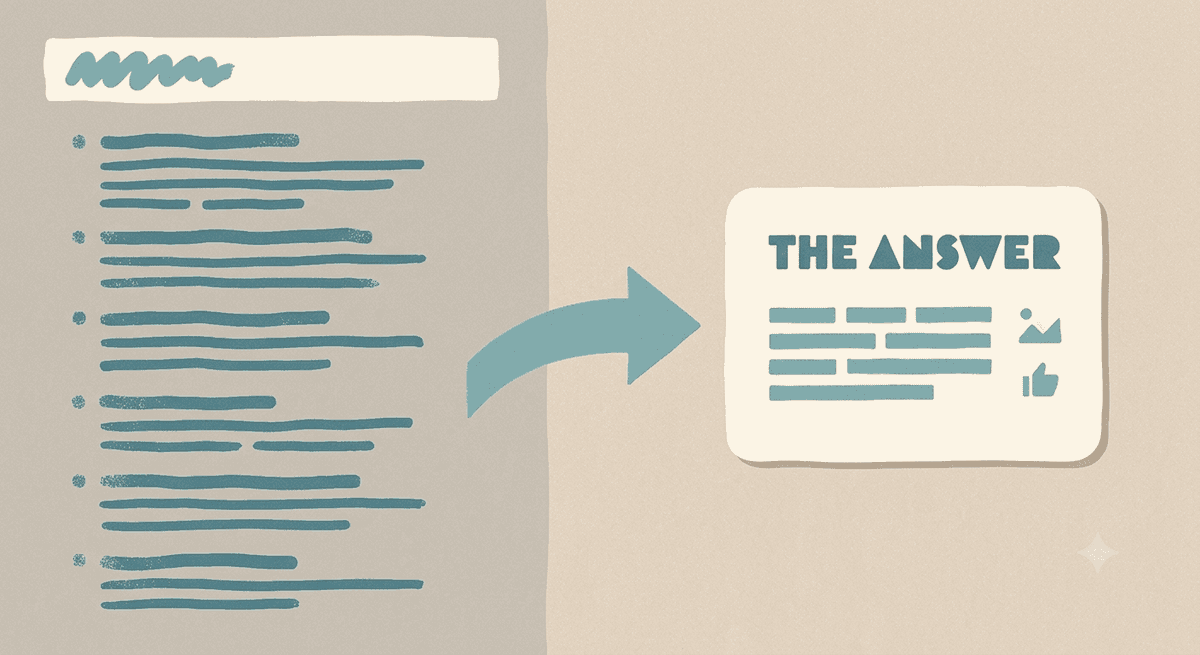
That answer comes from a few places now. Google AI Overviews sit at the top of the results page and summarize an answer pulled from business profiles, reviews, and websites. Google AI Mode goes further and holds a back and forth conversation. And then you have the standalone tools, ChatGPT, Gemini, Perplexity, and Claude, which more and more people open first when they want a recommendation rather than a list of ten blue links.
For a local service business this is both a threat and an opportunity. The threat is obvious. If the AI answers the question and never mentions you, your visibility quietly evaporates. The opportunity is better than most people realize. When your business is the answer the AI gives, the person who reaches out to you is usually ready to book. They are not browsing. They asked a direct question, got a direct recommendation, and picked up the phone. The raw traffic may be smaller, but the lead quality goes up. I watched this happen for a client and wrote it up in this AI search case study, where strategic web design landed them as the number one AI recommendation in their market.
SEO, AEO, and GEO for your DFW service business: what these actually mean
You are going to hear a pile of acronyms thrown around this year, and most of them are the same idea wearing different hats. Here is the plain version.
Traditional SEO is about ranking your website so people click it. AEO, answer engine optimization, and GEO, generative engine optimization, are about getting your business named and cited inside the answer the AI gives, whether or not anyone clicks. The old goal was a ranking. The new goal is to be the recommendation.
Here is the part nobody selling you a panic package wants to admit: the foundation is the same. One analysis found that about 74 percent of AI citations come from content that also ranks in traditional search. Ranking on page one of Google still puts you in the pool that the AI tools pull from. So this is not a reason to throw out everything you have done. It is a reason to build on it with a few specific moves.
Your Google Business Profile is your new homepage
For local questions, especially anything with “near me” or a city name in it, your Google Business Profile is the single most important asset you have. Gemini and AI Overviews pull directly from it because Google owns that data. When the AI builds a local recommendation, your profile is often the first thing it reads. You can manage yours directly through Google Business Profile.
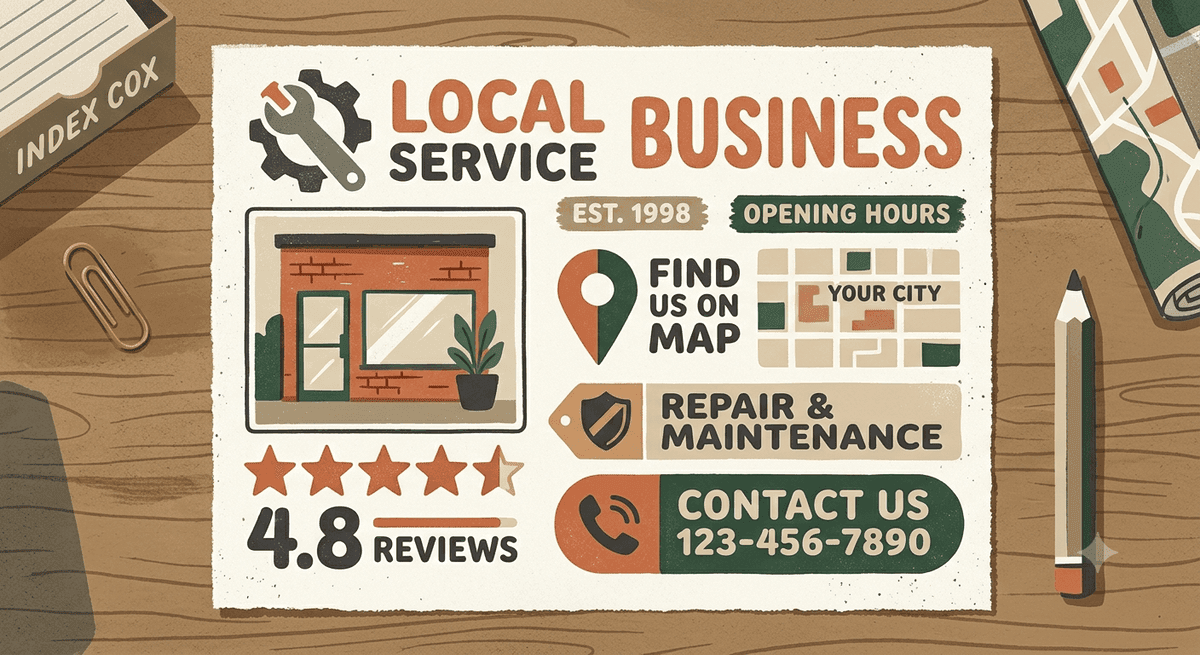
Treat it like the front door it has become. Here is what that means in practice:
- Pick precise categories. Vague categories dilute you. If you are an HVAC contractor, say so specifically, and add the secondary categories that match what you actually do.
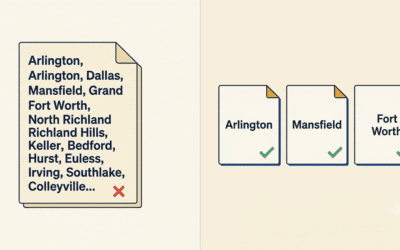
- Define your service areas honestly. List the DFW cities and neighborhoods you truly serve. Claiming the whole metroplex when you only cover Tarrant County works against you.
- Use real photos. Your trucks, your team, your finished jobs, your storefront. Swap out stock images. The AI and your future customers both reward businesses that look real.
- Update it like a feed. Post regularly, add fresh photos, answer the Q&A section. An active profile signals a real, operating business.
- Respond to every review. Consistent, human responses to reviews are one of the clearest legitimacy signals there is.
Write pages that answer questions, not just sell services
This is where most service business websites fall short, and it is the easiest thing to fix. Most sites have a page for each service. A page titled “AC Repair,” a page titled “Drain Cleaning.” Those pages are necessary, but they only capture people who already know the exact service they need.
The AI is answering questions. So you need pages that answer the question behind the service. Not just “Slab Leak Repair,” but “How do I know if I have a slab leak in my Texas home?” Not just “Roof Replacement,” but “How long does a roof last in the Texas heat?” You have to rank for the question to earn the right to sell the answer.
When you write those pages, structure them so an AI can lift a clean answer out without guessing. A few rules that work:
- Lead with the answer. Put a tight 40 to 60 word summary right at the top of the page that directly answers the question in the headline. AI tools love to pull that first clean paragraph.
- Use real questions as your headings. Write your H2s and H3s the way a customer would actually ask, not in marketing speak.
- Keep each claim self contained. If you say something specific, like a typical cost range or a timeline, put the number, what it covers, and the context in the same paragraph so it survives being quoted on its own.
- Write for a human first. The pages that win are clear, specific, and genuinely useful. Generic AI written filler gets ignored by both the reader and the engines. This is the same thinking behind building a website that actually drives sales.
Schema markup: the quiet advantage most local businesses skip
Schema is structured data in the background of your site that tells search engines exactly what they are looking at. It is invisible to your visitors and it makes a real difference to the AI. A BrightEdge analysis found that pages with comprehensive schema markup were roughly 2.7 times more likely to be cited in AI answers. If you want to see how Google itself describes it, their introduction to structured data is the source of truth.
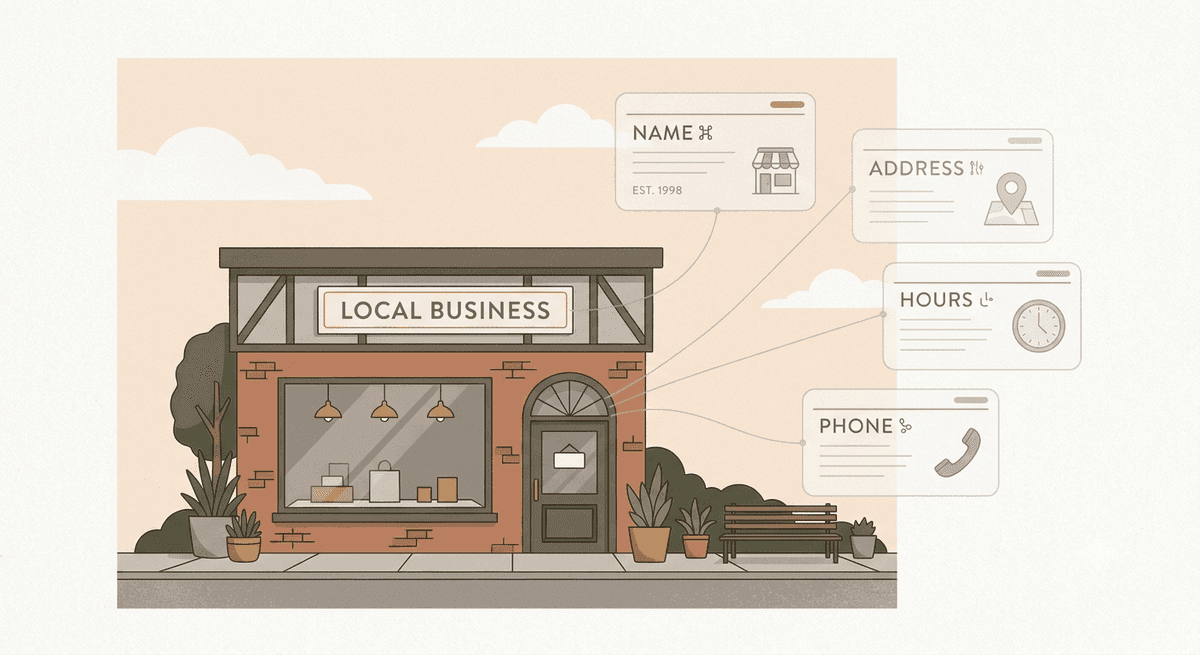
For a service business, the schema types that matter most are LocalBusiness, FAQPage, Article, and Organization. They tell the engines your name, address, phone, service area, hours, and the questions you answer. This is the kind of thing I build into every site I work on, because it is one of the highest leverage moves you can make and almost nobody does it.
Your brand name is now a ranking signal
This one surprised even me. Across audits of AI citations, brand search volume showed the highest correlation with whether a business gets cited. In plain terms, if people are searching for your business by name on Google, the AI tools are far more likely to recommend you.
That means brand building is no longer a soft, fuzzy marketing activity separate from your search strategy. It is part of your search strategy. Getting your name out in the community, earning mentions in local publications, showing up consistently, being known. The metroplex is a big market, but local reputation still travels. When your name shows up across enough trustworthy places, the AI starts to trust it too.
How to actually know if it is working
You cannot improve what you do not measure, and AI visibility is genuinely harder to track than old fashioned rankings. But you are not flying blind. Here is a simple routine you can run yourself:

- Ask the AI directly. Once a month, open ChatGPT, Gemini, and Perplexity and ask the questions your customers would ask. “Best [your service] in [your city].” See if you show up, and note which competitors keep appearing.
- Watch Google Search Console. It now reports on AI Overview presence and gives you a read on which of your pages the engines are leaning on.
- Track AI referral traffic. You can set up a channel in your analytics to catch visits coming from ChatGPT, Gemini, Perplexity, and the rest, so you can see the traffic that is already arriving.
- Ask new customers how they found you. More and more often the answer is going to be “an AI tool recommended you.” That is your real world signal.
One thing to set your expectations on: this is not an overnight switch. Most businesses start seeing early movement within 60 to 90 days of fixing their structure, schema, and technical foundation. Consistent visibility across multiple AI tools usually takes six months or more, because it rides on long term authority and trust. It also rides on a site that stays healthy, which is why ongoing website maintenance matters more than people think. Treat AI visibility as a leading indicator. The brands building it now will own the answers later.
The honest bottom line for a DFW service business
Here is what I would tell you if you were sitting across from me. You do not need to panic, and you do not need to chase every new acronym someone posts about on LinkedIn. The fundamentals still carry most of the weight. A fast, clearly written website. A fully built out, actively maintained Google Business Profile. Real reviews from real customers. Content that answers the questions your customers actually ask. Clean schema in the background. A brand that people in your area know by name.
Do those things well, and you are not just optimizing for ChatGPT or Gemini or whatever comes next. You are building a business that is genuinely easy to find and easy to trust, which is the same thing search engines and AI tools are trying to reward in the first place. The technology changed. The principle did not.
Frequently asked questions about AI search for local businesses
What is the difference between SEO and AEO?
SEO, search engine optimization, is the work of ranking your website so people find and click it in search results. AEO, answer engine optimization, is the work of getting your business named and cited inside the direct answer that tools like Google AI Overviews, ChatGPT, and Gemini generate. SEO earns a ranking. AEO earns the recommendation. The two share the same foundation, since most AI citations come from pages that already rank well in traditional search.
How do I get my business recommended by ChatGPT and Gemini?
Build a complete, actively maintained Google Business Profile with precise categories and honest service areas, publish website pages that answer the real questions customers ask, add LocalBusiness and FAQ schema so engines understand your site, earn genuine reviews, and grow your brand recognition locally. AI tools recommend businesses they can clearly understand and independently verify across multiple trustworthy sources.
Does traditional SEO still matter in 2026?
Yes, more than ever. Roughly 74 percent of AI citations come from content that also ranks in traditional search, so a strong SEO foundation is what puts you in the pool of sources AI tools draw from. The smart move in 2026 is not to abandon SEO, but to layer answer engine optimization on top of solid SEO fundamentals.
How long does it take to show up in AI search results?
Most local businesses start seeing early movement within 60 to 90 days after improving their site structure, schema, and technical foundation. Consistent visibility across multiple AI platforms usually takes six months or more, because it depends on long term authority and trust signals that build gradually.
Is AI search optimization worth it for a small DFW service business?
For most local service businesses, yes. AI search tends to reduce casual browsing traffic but increase high intent leads, because the people who reach you after an AI recommends you are usually ready to book. Most local competitors in the DFW area have not optimized for this yet, which makes right now an early adopter window worth taking.
Ready to get found when your next customer asks the AI?
If you run a service business in the DFW area and you want a straight answer on where you actually stand in AI search, that is exactly the kind of work I do at PC Designs. No template, no guesswork, no scare tactics. Just a real look at your site and a plan to get you in the answer when your next customer asks. Reach out and let’s talk.